
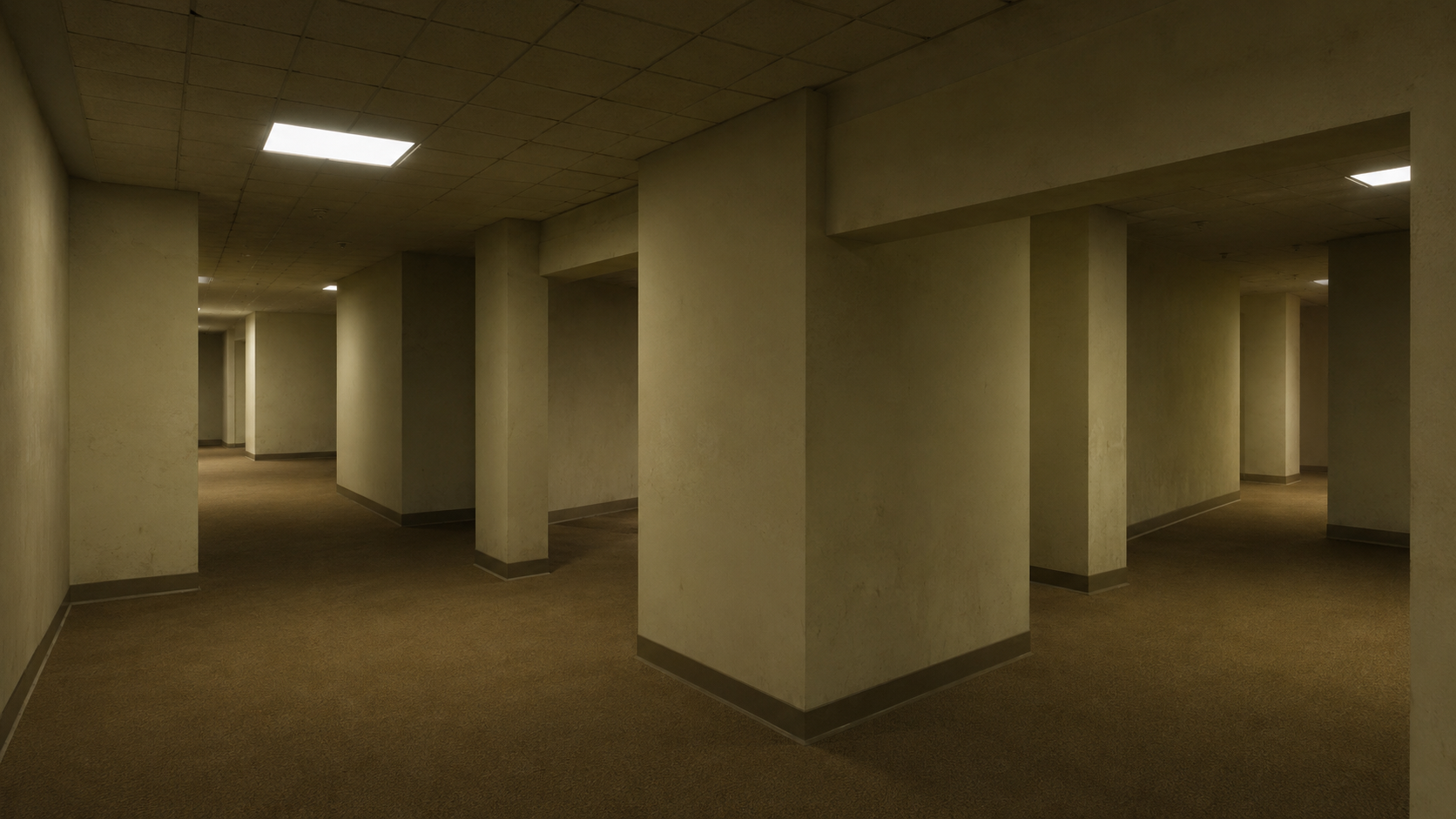

Okay, I must admit that this title is so Backrooms-coded lmao.
I can understand what the movie is all about, or even its original YouTube series, without ever searching through the millions of theories people throw onto the internet. Even if my interpretation isn’t exactly what Kane Parsons intended, I somehow made up my own theory just by watching it.
The whole emotional power of Backrooms, to me, comes from absence becoming tangible.
The rooms are empty, but they don’t feel neutral. They feel like something has happened there, or something is supposed to be there, or something has been removed and left a shape behind.
Ordinary architecture becomes unsettling precisely because human presence is missing, while traces of purpose, memory, bureaucracy, and expectation remain. It’s that feeling when you just know something has happened in there, don’t you think?
I am, and this is somehow hard to admit even to myself, very sensitive to emotional architecture.
A room isn’t just a room. A piece of music can carry something. Glimmering dust suspended in the air isn’t just dust. And so on.
My brain immediately sees physical and non-physical structures as representations of everything: relationships, memory, psychological states, control, grief.
The bad news is that sometimes the occupant disappears before the architecture does.
And that is emotionally fucking liminal. That’s what liminal is all about, well, at least to me.
Talking about rooms, liminal rooms scare the hell out of me.
These rooms basically say, I cannot tell what the fuck is supposed to happen here.
And yes, everything somehow comes back to point zero for me. Everything must have a purpose, a meaning, a something.
Huge empty hotel corridors, vacant waiting rooms, abandoned malls, enormous offices under fluorescent lighting give me very few anchors. The boundaries are technically there, but they seem too far away. There’s too much unused space, too many possible directions, but too little information about what belongs where.
A small room, even a cramped one, tells me exactly what it is: a door, a bed, a chair, a window. There’s no more complex processing after that. Only more basic questions. Who sleeps here? Who sits there? How long has this window been closed? What’s behind that door? And so on.
Well, it still needs some research, BUT: it is a smaller scene to investigate.
My brain can work a little easier because the unknown is finite. It can be calculated.
To me, a room means containment. It must hold something. Which is probably why an empty room that somehow cannot empty itself scares me much more than it would someone who experiences space as merely… space.
Because, again, no room is ever just empty.
It must have held something. A person. A purpose. A conversation. A routine. A version of someone. A version of yourself even.
Sometimes the thing leaves before the room knows how to stop holding it.
Maybe that’s the problem.
Nothing ever really leaves the room. Even when it’s nobody inside.
This kind of architectural residue could, or probably has, happened a million times in our lives.
Say someone leaves a rented condo. The next person who moves in might immediately feel something. Not necessarily curiosity about the previous tenant, but I’m pretty sure some characteristics of whoever lived there before would have left a mark or two, even in an empty and probably freshly renovated space.
It could be in how the windows are positioned, how the kitchen is arranged, where the doors lead, or anything, really. And then this new tenant has to adapt to an arrangement that was never made for them in the first place.
Which makes me wonder: if the Backrooms didn’t have those ugly, terrifying yellow walls, fluorescent ceiling lamps, scattered furniture, endless corners, and sections that seem to lead nowhere, would they still be that terrifying? Because maybe part of the horror is that the space already feels decided.
You didn’t choose any of it. You didn’t choose the walls, the lighting, the proportions, or where one corridor ends and another begins. And you cannot immediately scan the whole thing and think, okay, I can make this better.
With our own beliefs. Our own taste. Our own sense of order.
Maybe that is what makes a strange room easier to tolerate: the belief that eventually, somehow, we can rearrange it enough to make it ours.
So I can relate a lot when people say they simply can’t stand being in a certain room, because a room isn’t just a room. It can become a containment of everything that happened there, even if, objectively, that probably isn’t true at all.
Sometimes being inside that room just doesn’t feel safe anymore. Or comfortable. Or neutral.
All you want to do is never enter it again.
Or maybe you still look at it from afar once in a while, just to see what has changed. Whether the furniture has moved, whether the light feels different, whether somebody else has started occupying it, whether it still feels like the same room.
And maybe that is the strangest part: sometimes we avoid a room not because of what is physically inside it, but because of what we know used to be there.
But again…
What if you really need to go back in, just to be sure?
To find out whether the fear is only fear, gripping you and convincing you that something terrible will happen the moment you enter. Or worse, that once you step inside, the door will disappear and you won’t be able to go back.
But what if there’s simply… nothing?
Just a clean room.
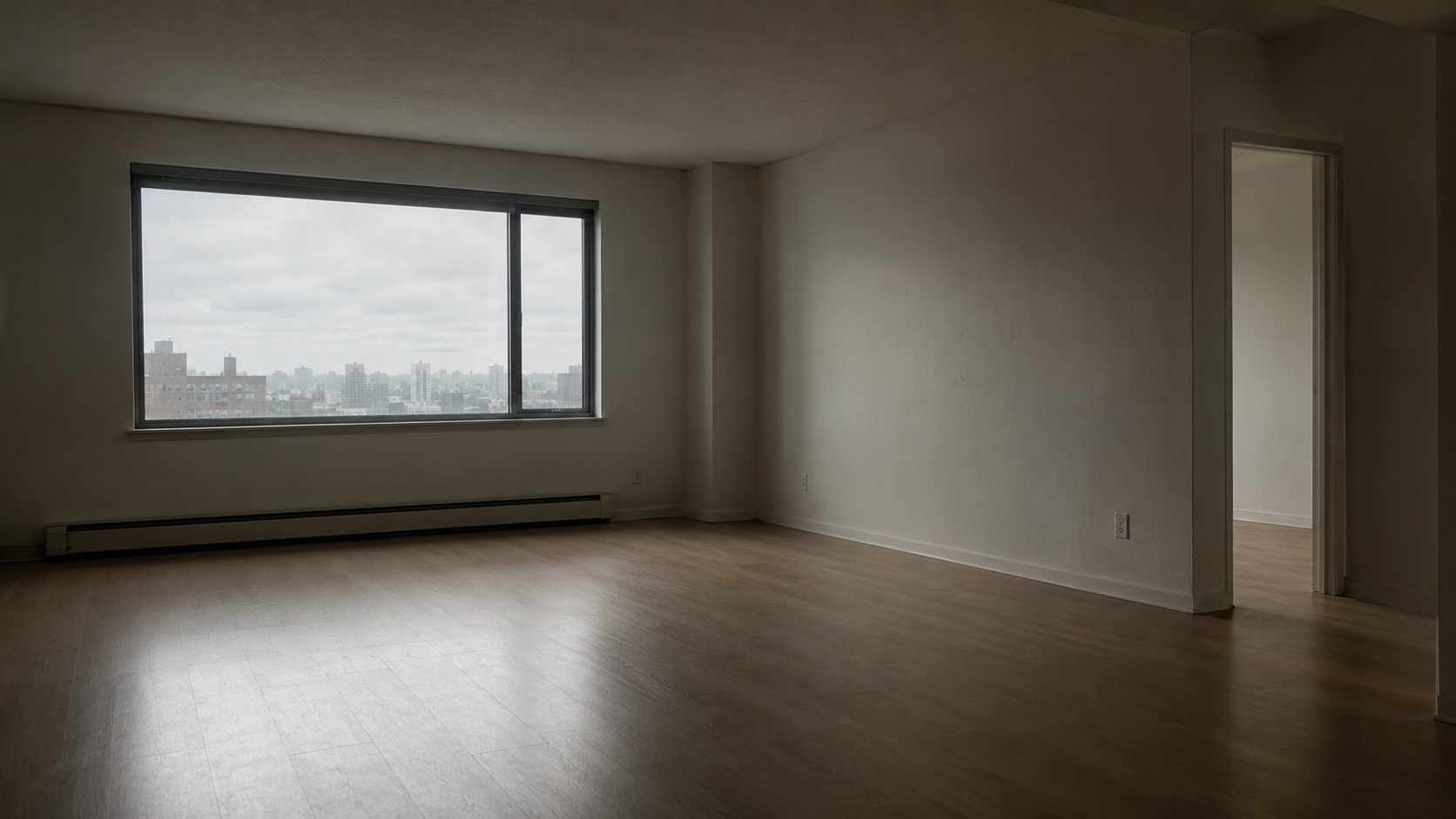
No grudges, no stories, no ghosts waiting in the corners. Nothing.
A room that is finally empty enough for you to decorate again. To move the furniture around, open the windows, decide what stays and what doesn’t, and start anew.
Well, the human mind is truly terrifying, yet undeniably beautiful. In the end, maybe it comes down to what you choose to see.
Whether you see the room as something that still holds all the previous problems, and perhaps even the problems waiting for you in the future, or whether you accept that, yes, it held stories before, but you decide to push them aside.
Not erase them.
Keep them as mementos, perhaps. Proof that something happened there. Proof that something once mattered. But no longer instructions for what must happen next.
And then? You start again.
You rearrange the room, open the windows, and bring something new inside. The old architecture may still be there.
But it doesn’t have to dictate how you live in it now.